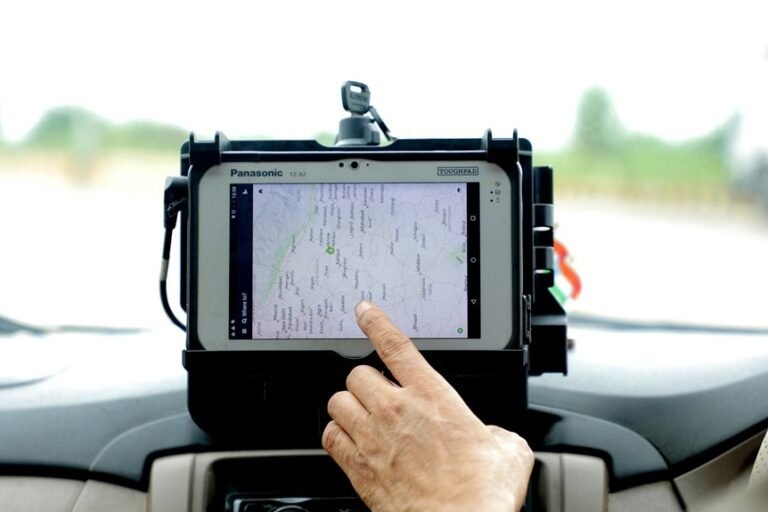
Smart Radar Start 614-456-0079 Revealing Advanced Contact Trace Signals

Smart Radar Start 614-456-0079 introduces a framework for revealing advanced contact trace signals. The article examines persistent, low-power radar sensing that logs proximity events, timing sequences, and exposure likelihood with modular, privacy-conscious governance. It emphasizes autonomy, user controls, and safety resilience while providing objective metrics and practical demonstrations. A clear, rigorous assessment remains essential as deployment in everyday settings raises questions about calibration, stability, and real-world feasibility, inviting further scrutiny.
What Are Advanced Contact Trace Signals?
Advanced contact trace signals refer to data indicators used to map and infer interactions between individuals and devices in a population. The concept centers on structured observations of contact events, exposure likelihood, and transmission pathways. These signals enable policy-neutral assessment, resilience, and transparent reporting. They include advanced contacttrace markers and real time signals, supporting objective analysis without subjective interpretation or embellishment.
How Smart Radar Captures Interactions in Real Time
Smart Radar operates by continuously emitting low-power signals and analyzing reflections to construct real-time interaction maps. The system detects proximity events, simultaneous contacts, and temporal sequences, aggregating data into actionable logs. It emphasizes transparent operation and modular processing.
smart radar and real time data are processed under strict privacy concerns, with data minimization guiding collection, retention, and sharing policies.
Privacy, Safety, and Everyday Use: What Changes With Smarter Signals
Privacy and safety considerations evolve as signaling becomes more capable, raising questions about what smarter radar signals mean for everyday use.
The discussion centers on how enhanced traceability affects autonomy, consent, and context-specific disclosure.
Privacy concerns emerge from persistent data collection and profiling, while safety implications address device resilience, misinterpretation risks, and potential misuse, requiring robust governance and transparent user controls.
Evaluating the Technology: Key Metrics and Practical Demos
Evaluating the technology requires a disciplined assessment of metrics and demonstrations that quantify performance and reliability. The analysis centers on evaluation metrics, objective benchmarks, and reproducible results from practical demos. Considerations include privacy concerns, resilience to interference, and calibration accuracy. Findings highlight everyday safety implications, parameter stability, and deployment practicality, guiding informed decisions about integration, risk management, and user confidence in real-world operations.
Conclusion
The investigation concludes with careful optimism: smart radar-driven contact trace signals, while subtly transformative, operate within established privacy safeguards and user controls. As proximity and exposure data flow become more transparent, the system invites measured adoption, balancing technical clarity with societal considerations. In essence, the approach hints at enhanced situational awareness and governance agility, offering actionable insights without compromising fundamental rights, and thereby gently steering deployment toward informed, incremental refinement.